
Projectile Motion
Learn about projectile motion and main concepts when an object is thrown in the air under the influence of gravity.
Learning Targets
- I can explain how the X-Axis and Y-Axis velocity of projectile motion acts independently
- I can identify key moments of projectile motion including the beginning, top of flight path, and landing at same height
- I can answer questions about horizontal and vertical velocity and acceleration
- I can recognize X-Axis and Y-Axis projectile motion on a position/time (PT) and velocity/time (VT) graph
Watch our video or read through the content below and check your knowledge about projectile motion.
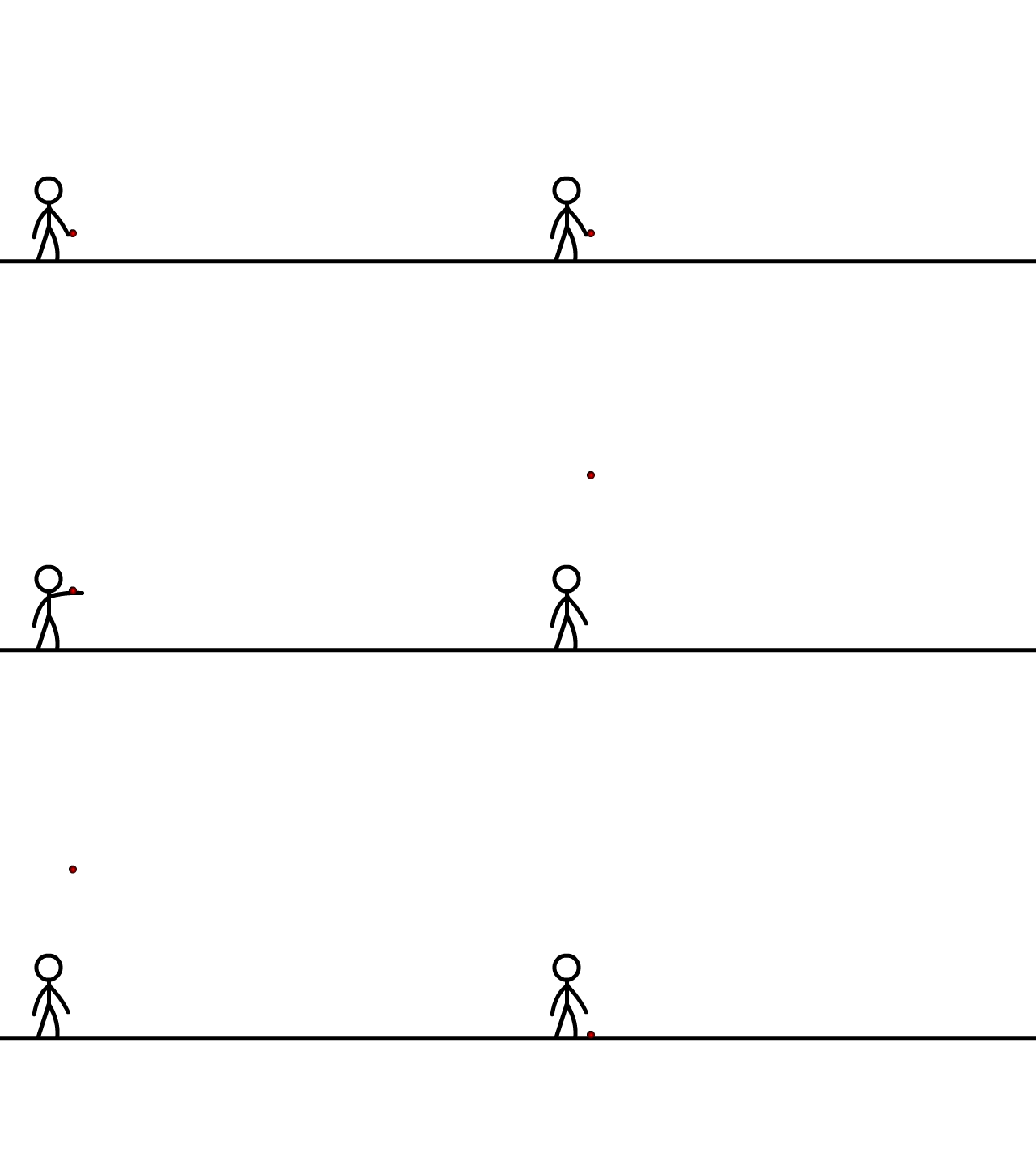
Projectile motion results from an object being thrown, shot, rolling off a table, etc. and its in the air. Once in the air, the only thing acting on the object is gravity. The parabolic path the object takes is called the trajectory.
Projectile- Object that is in the air in free-fall accelerated by gravity
-
- It could have been thrown to get in the air
- It could have been dropped
- It could have rolled off a counter
Trajectory- parabolic path of a projectile
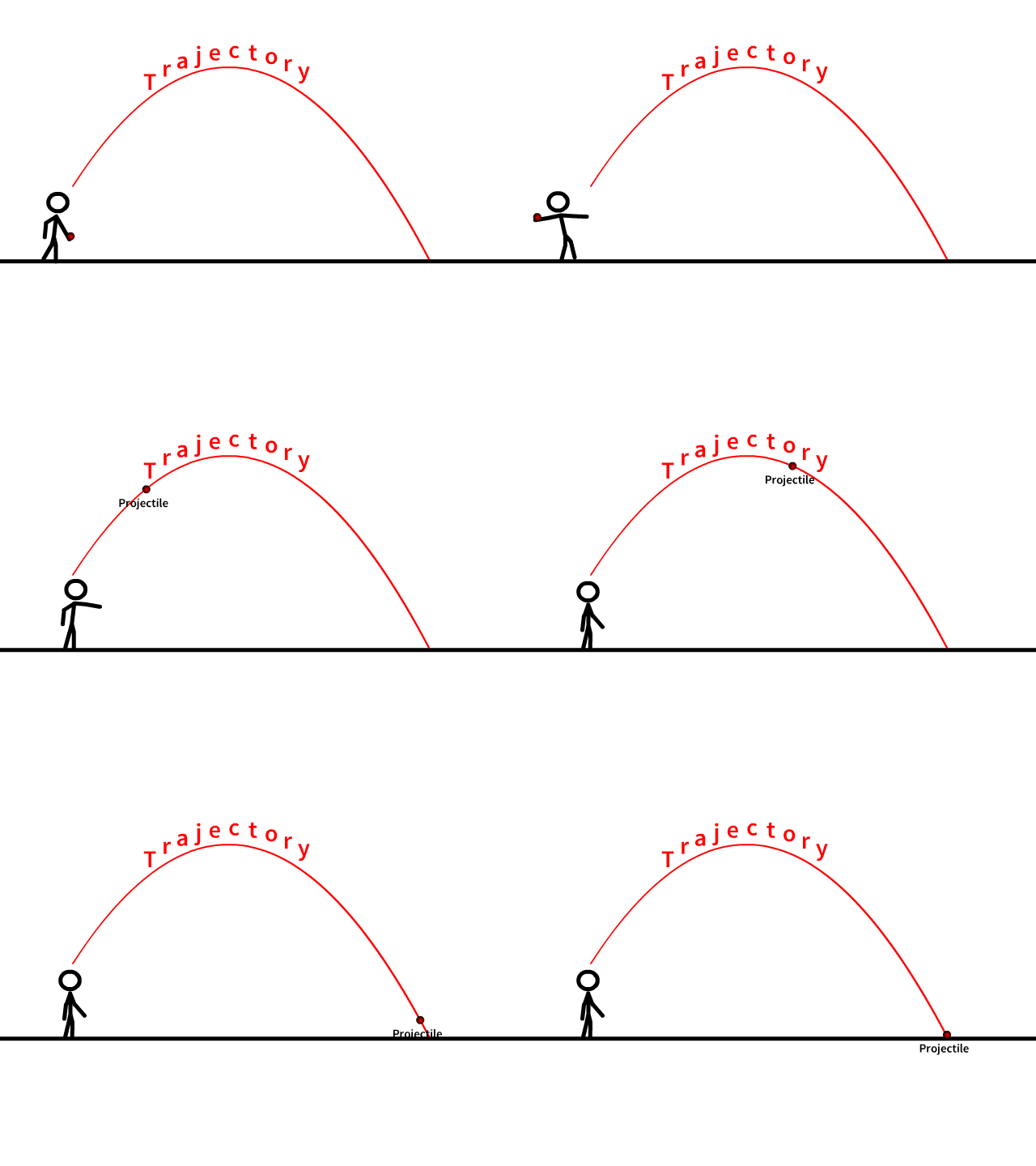
We use ideal conditions ignoring air resistance for this unit. Because Ideal means "perfect or simple" we may ignore other factors that could affect the situation.
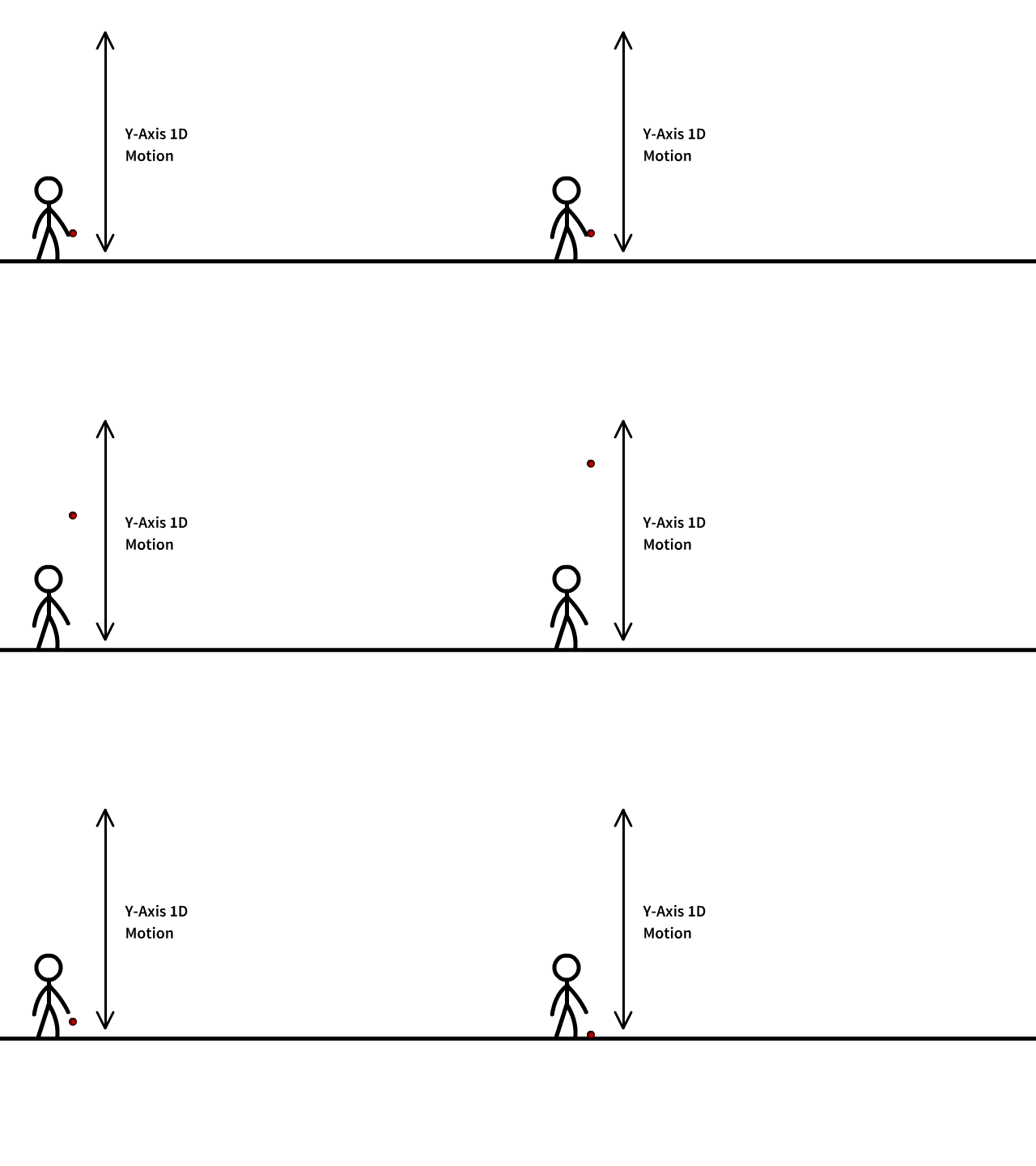
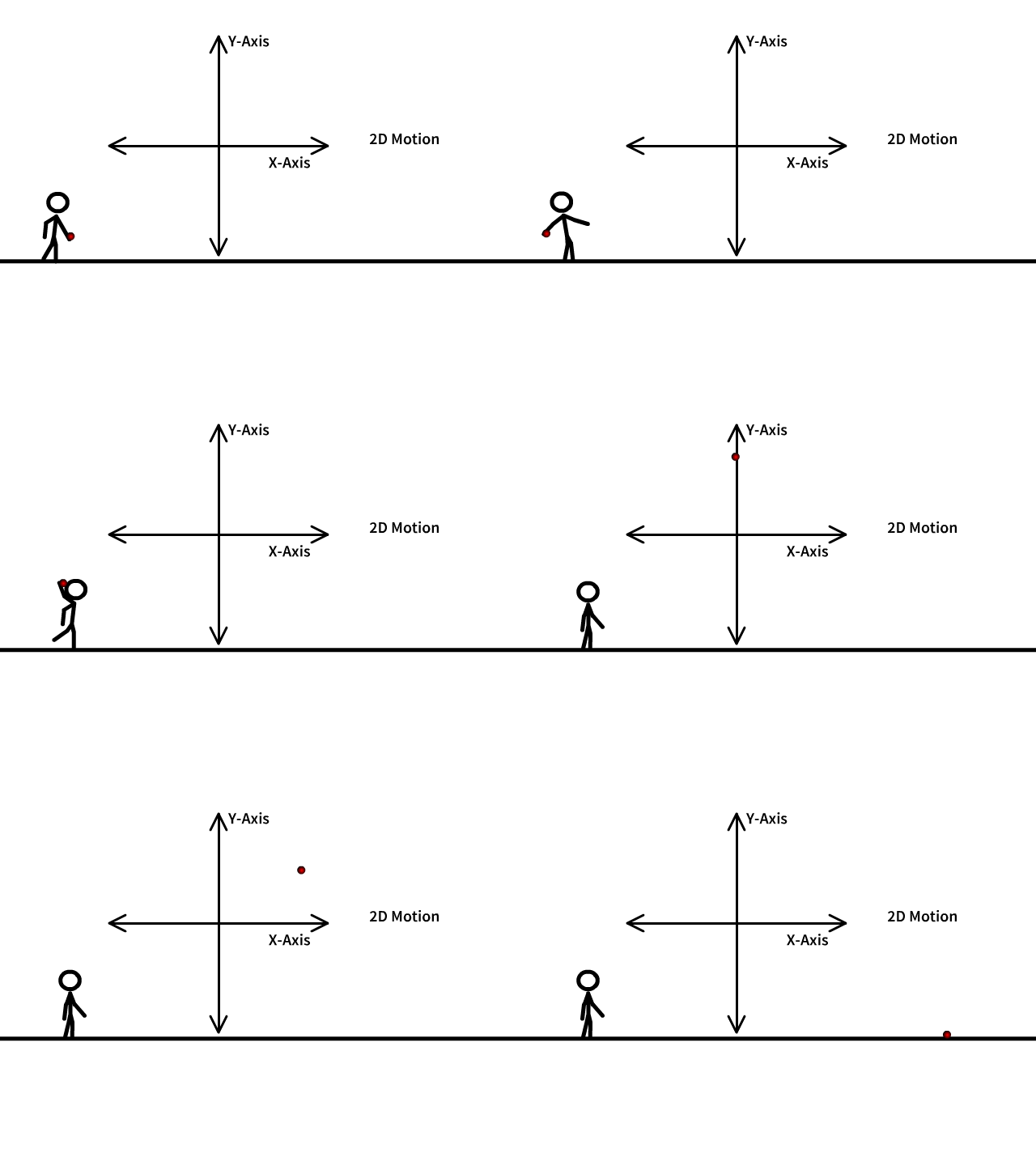
In this 2D unit, we will follow an object that entered the air also with an X-Axis component
It will be going sideways and in free-fall
Free-fall does not mean it starts down but only influenced by gravity
X-Axis and Y-Axis Velocity Act Independent of Each Other
What does this mean?
- The acceleration due to gravity only affects the Y-axis motion
- No matter the velocity in the X-Axis the Y-Axis is doing something different
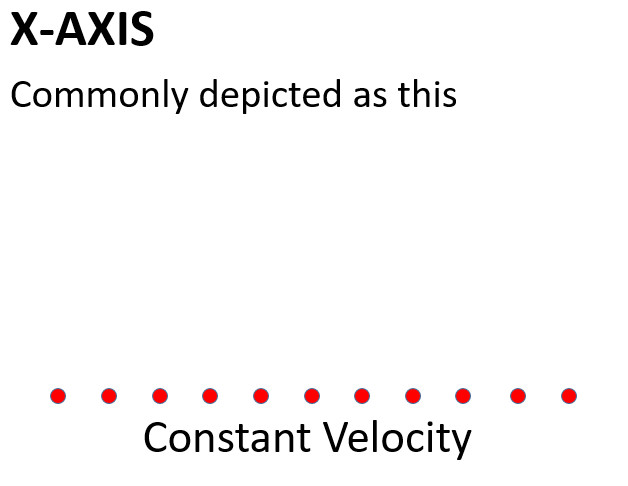
X-AXIS Velocity
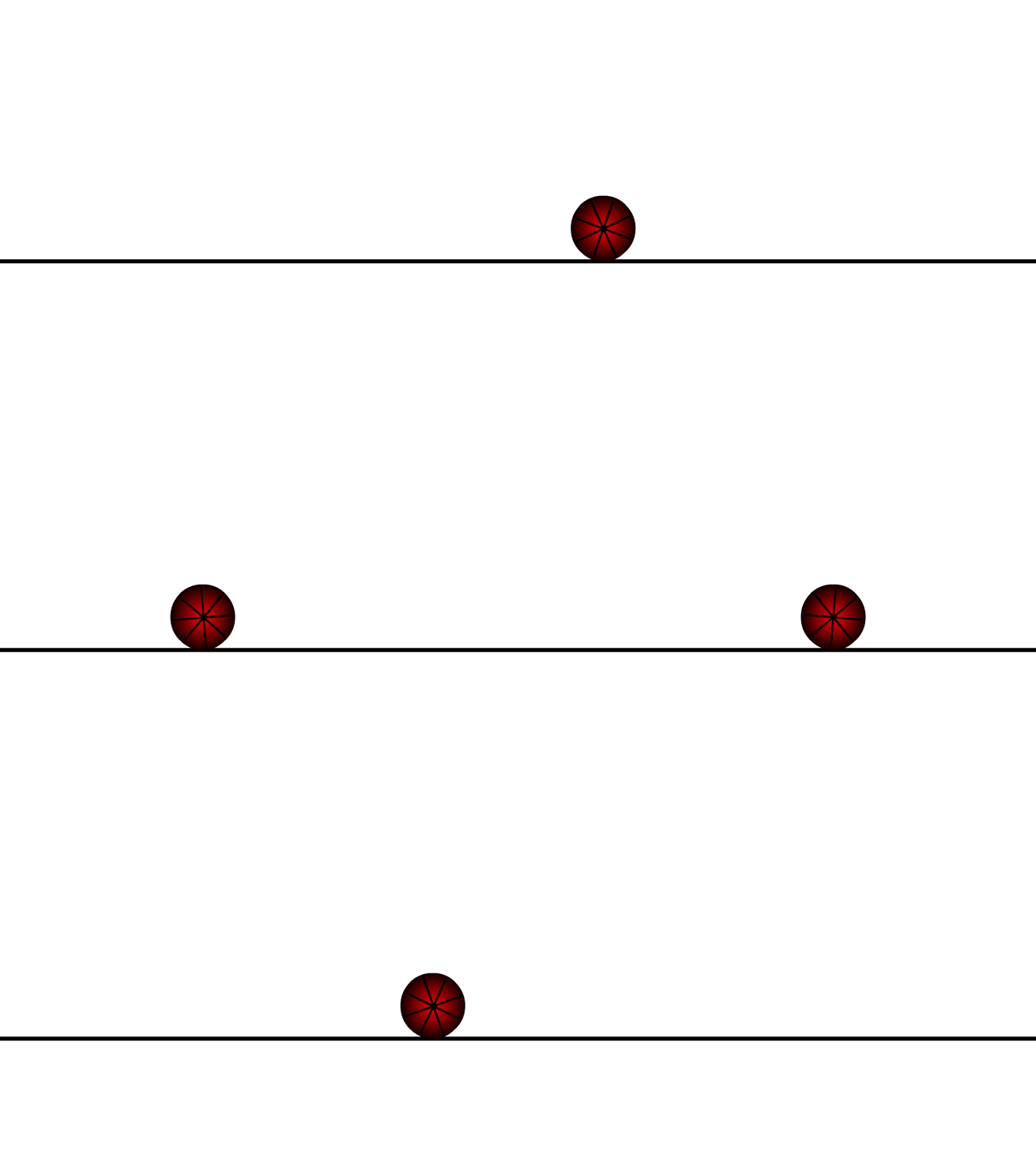
- X-Axis motion is not affected by the acceleration due to gravity
- X-Axis motion is at a constant velocity
- This can be shown by an image that has equal spacing representing the same displacement per time
Y-AXIS Velocity
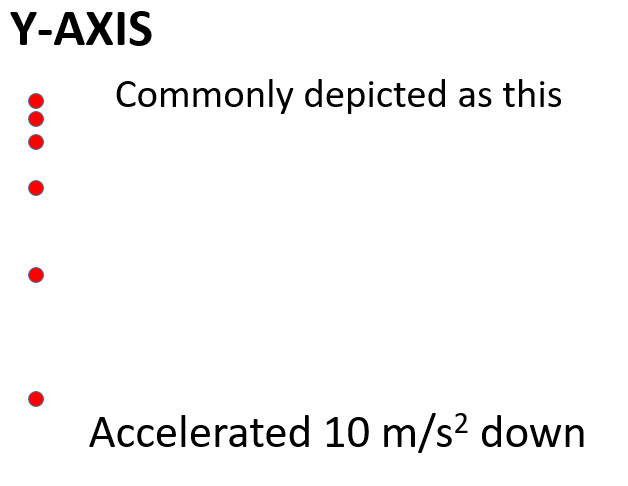
- Y-Axis motion is affected by the acceleration due to gravity
- Y-Axis motion is accelerated at 10 m/s² down
- Slows down on the way up and speeds up on the way down
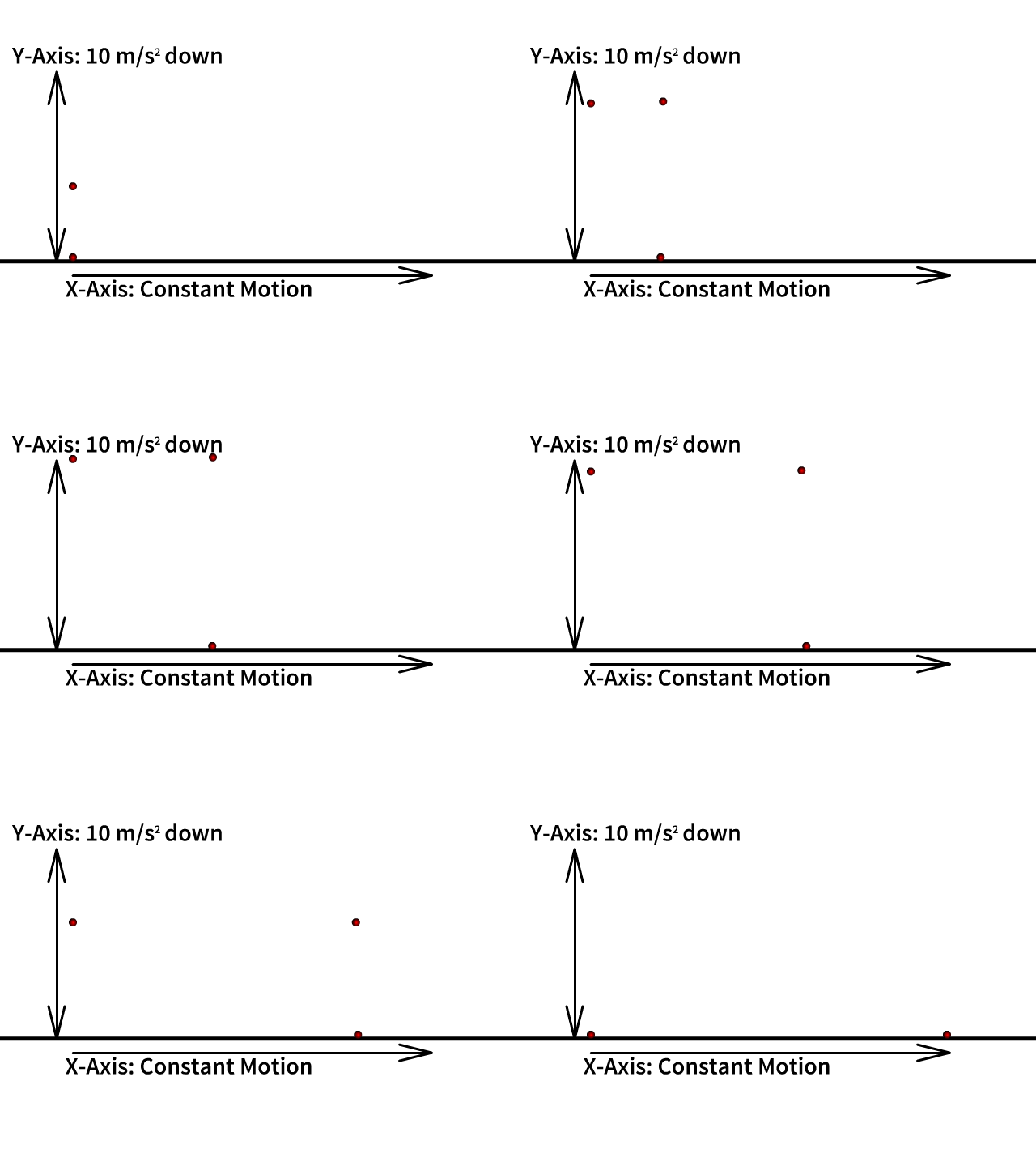
X-Axis and Y-Axis Velocity Combined
- Combined the motion follows an upside down U shape or Parabola
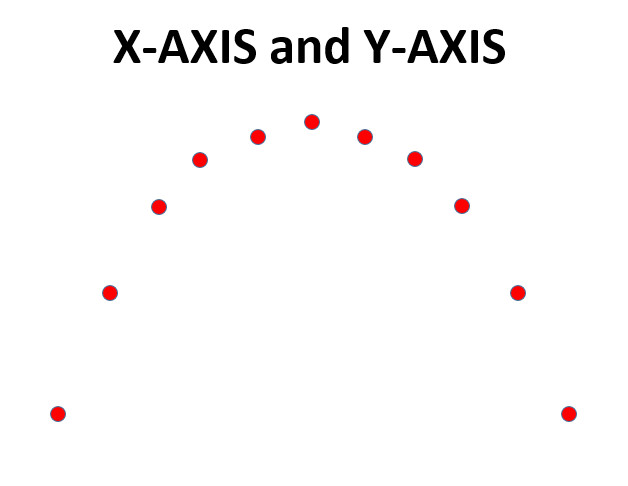
Lets thrown in some numbers for further discussion
If a person threw a ball with an initial Y-Axis component of 30 m/s and an initial X component of 5 m/s
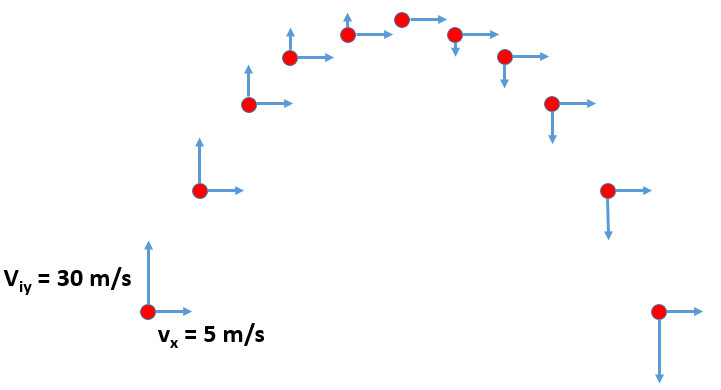
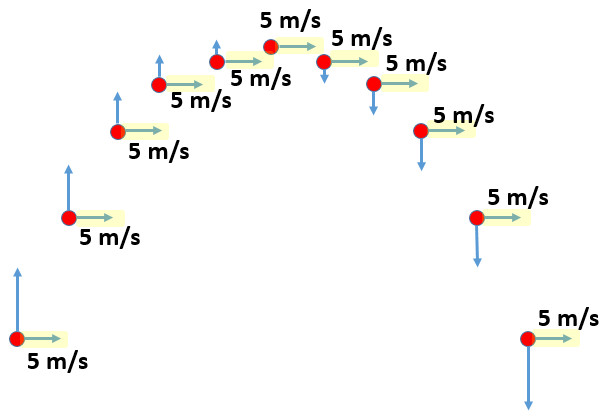
The X-Axis velocity will remain constant
- If you know the vx is 5 m/s anywhere, you know its that everywhere
- The minimum velocity of a projectiles flight is at the top or peak
- At the top of the projectiles flight the overall velocity would be 5 m/s since there is no Y-Axis component
The Y-Axis Velocity will be Accelerated by Gravity
- Y-Axis always has an acceleration due to gravity of 10 m/s² down
- This slows the velocity down on the way up (+v, -a)
- This speeds the velocity up on the way down (-v, -a)
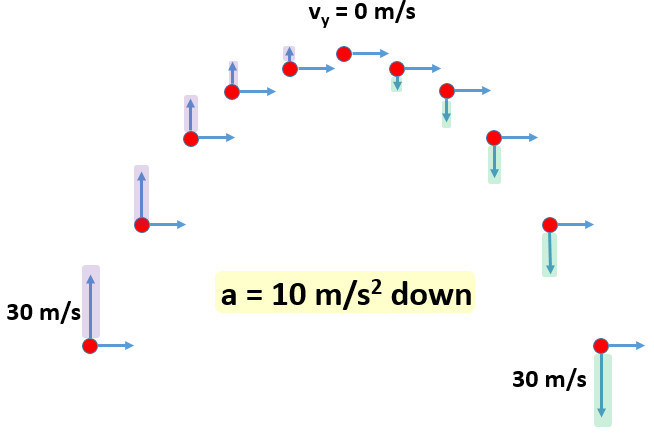
- At the top of the flight, the Y-Axis component of velocity is 0 m/s
- When the object comes back to the level thrown, the Y-Axis component of velocity has the same magnitude but opposite direction
- The starting Y-Axis velocity was 30 m/s up
- The ending Y-Axis velocity was 30 m/s down
- A projectile would have maximum speed at the bottom of its flight
- The X-Axis velocity would be the same but it would have the largest Y-Axis component
Solving for Overall Velocity
- At the top of the projectile flight, overall velocity is equal to its horizontal vleocity
- Anywhere else, you can solve for overall velocity (hypotenuse) using the X and Y components
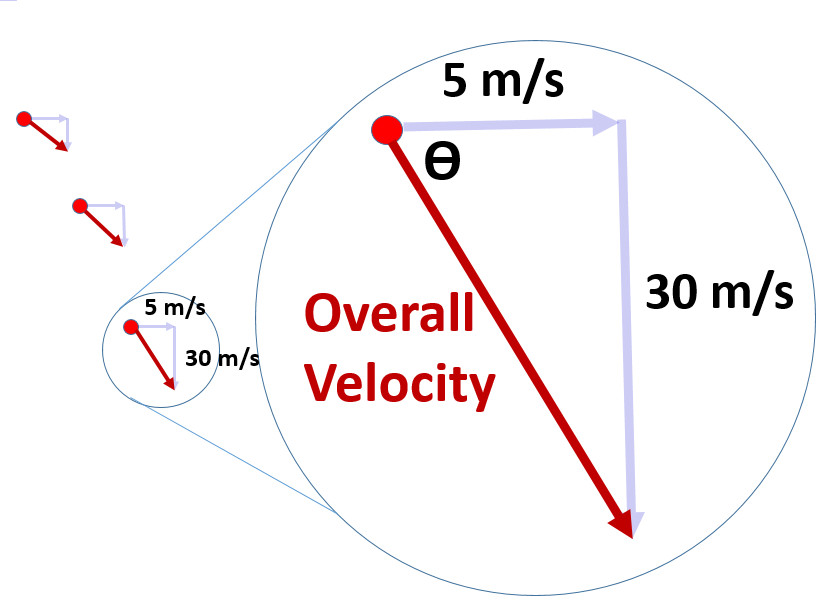
Q1: What is the overall velocity of a ball that lands with a 5 m/s horizontal velocity component and 30 m/s down vertical component?
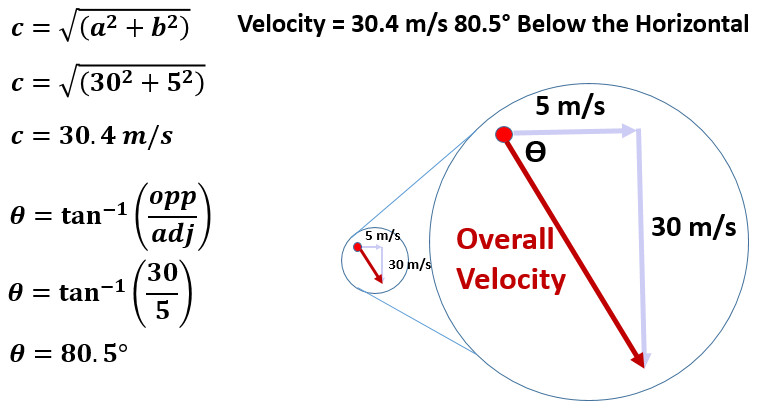
Q2: What is the speed of a ball that lands with a 5 m/s horizontal velocity component and 30 m/s down vertical component?
Scenario for Questions:
A ball is thrown with a horizontal component of velocity of 12 m/s and an initial vertical component of 25 m/s up
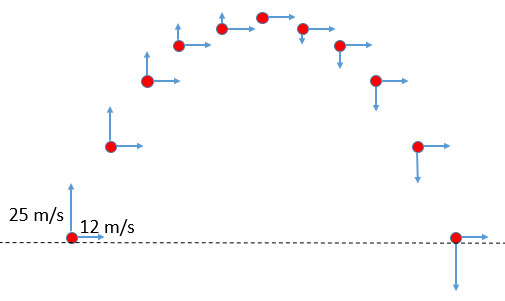
Q3: What is the vertical component of velocity of the ball at the top of the flight path?
Q4: What is the horizontal component of velocity of the ball at the top of the flight path?
Q5: What is the acceleration of the ball at the top of the flight path?
Q6: What is the overall velocity of the ball at the top of the flight path?
Q7: What overall magnitude of velocity does the ball land at?
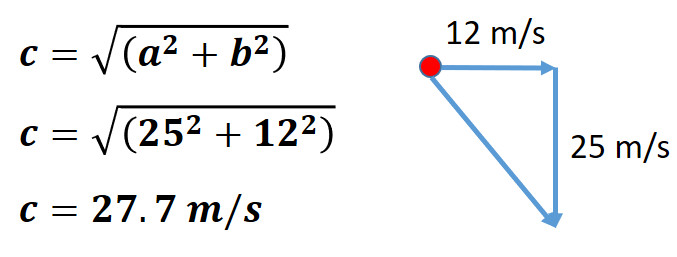
Q8: What is the vertical component of velocity when the ball returns to the same level?
Q9: What is the horizontal component of velocity when the ball returns to the same level?
More Projectile Motion Facts
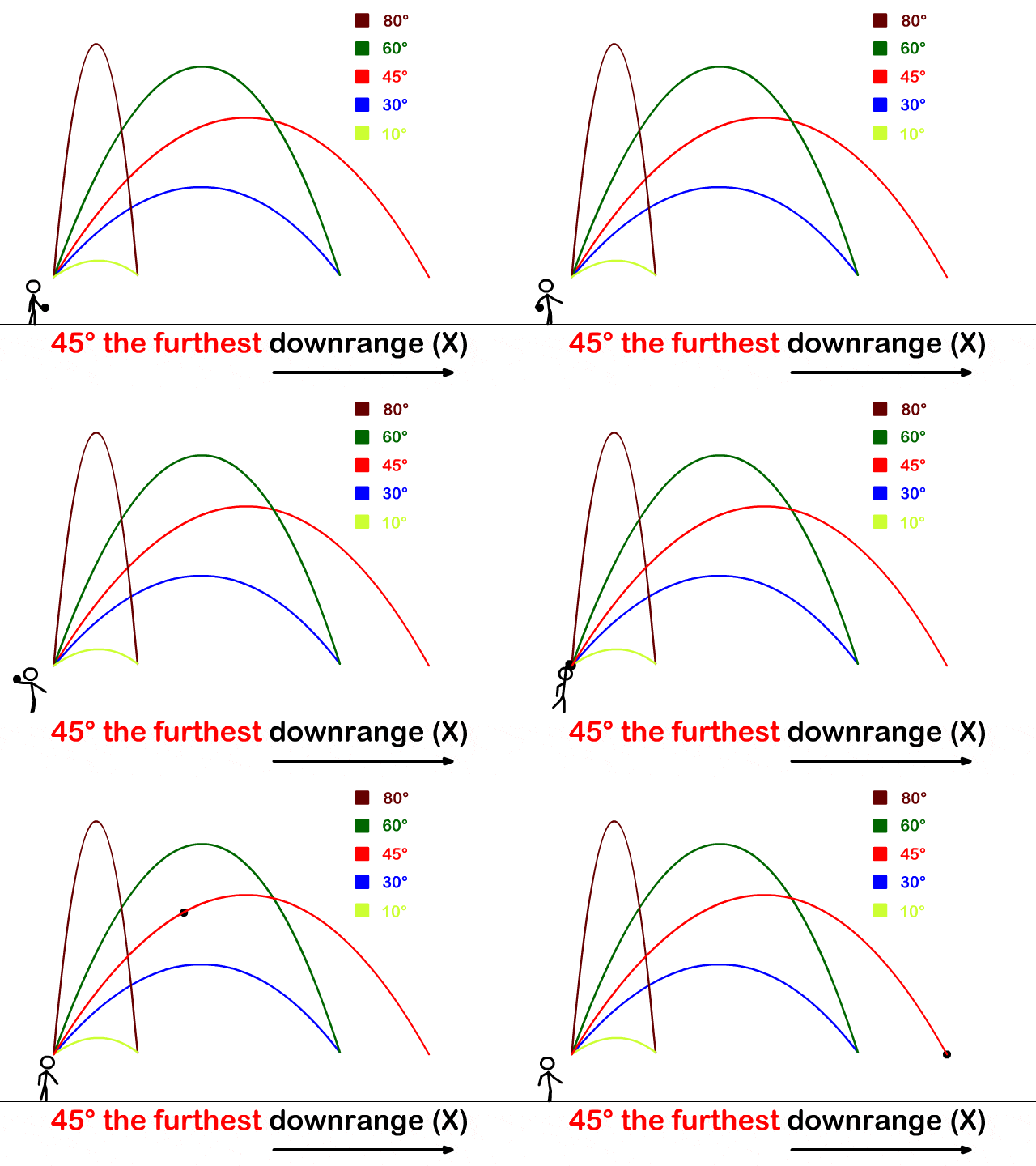
Launching at a 45° angle will get you the furthest downrange distance
- Downrange means horizontal distance
Launching a projectile at 90° angle or straight up will give it the largest height
Perspective and Projectile Motion
Relative Motion
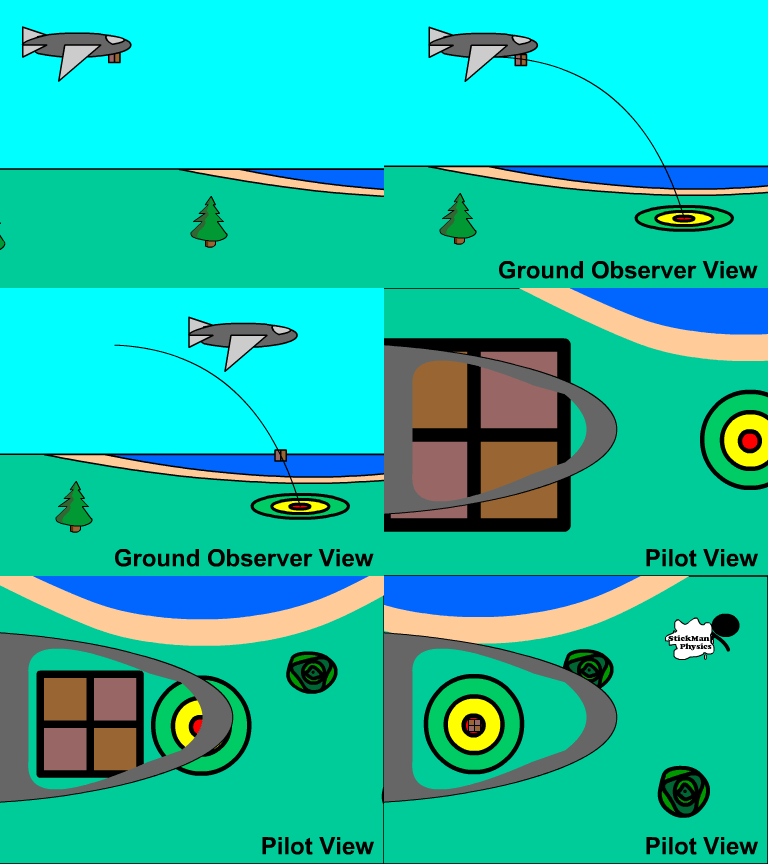
Motion and many other things are relative. Relativity in physics asks the question, "what is it compared to?" You may think that you are sitting at a desk at rest but that is only relative to the surface of the earth. Because the earth is rotating at 460 meters per second, relative to being in space, you're moving fast.
Use the concepts of constant horizontal velocity and accelerated vertical velocity to answer the questions.
Example Questions
Q10: What angle would you throw a ball to have it land the furthest downrange?
Q11: How would a package dropped from a plane traveling at a constant horizontal velocity appear to the pilot?
Q12: How would the package appear to an observer on the ground?
Q13: When would a package have to be dropped in order to hit a target?
A Greater Horizontal Speed Has No Affect on Time to Fall
The X and Y component of projectile motion are independent. So no matter how fast or slow the horizontal component of velocity is, the Y axis does its own thing. A bullet shot at 350 m/s from a height of 1 meter above the ground would fall at the same rate as a bullet dropped from the same height. In the Y axis, both bullets start from rest, accelerated by gravity in a downward direction by 10 m/s2. Therefore taking the same time to hit the ground.
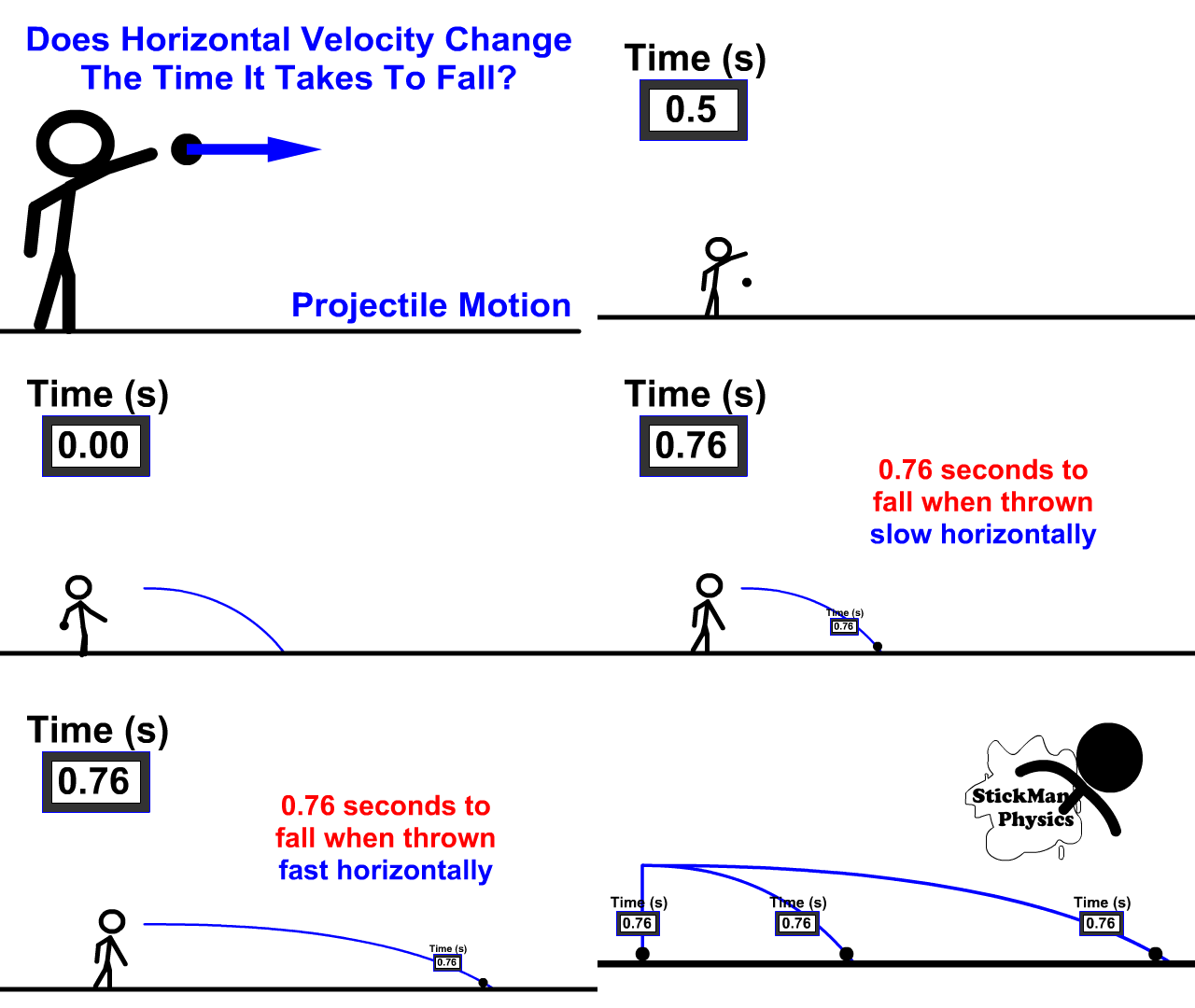
Q14: Which would hit the ground first if thrown or dropped from 1 meter above the ground? (Pick One)
A) A ball dropped
B) A ball thrown horizontally forward at 5 m/s
C) A ball thrown horizontally forward at 25 m/s
D) All hit at the same time
Projectile Motion Position Time and Velocity Time Graphs
The Y-Axis velocity component of projectile motion is accelerated downwards by 10 m/s².
Y-Axis Motion on a Position/Time (PT) Graph
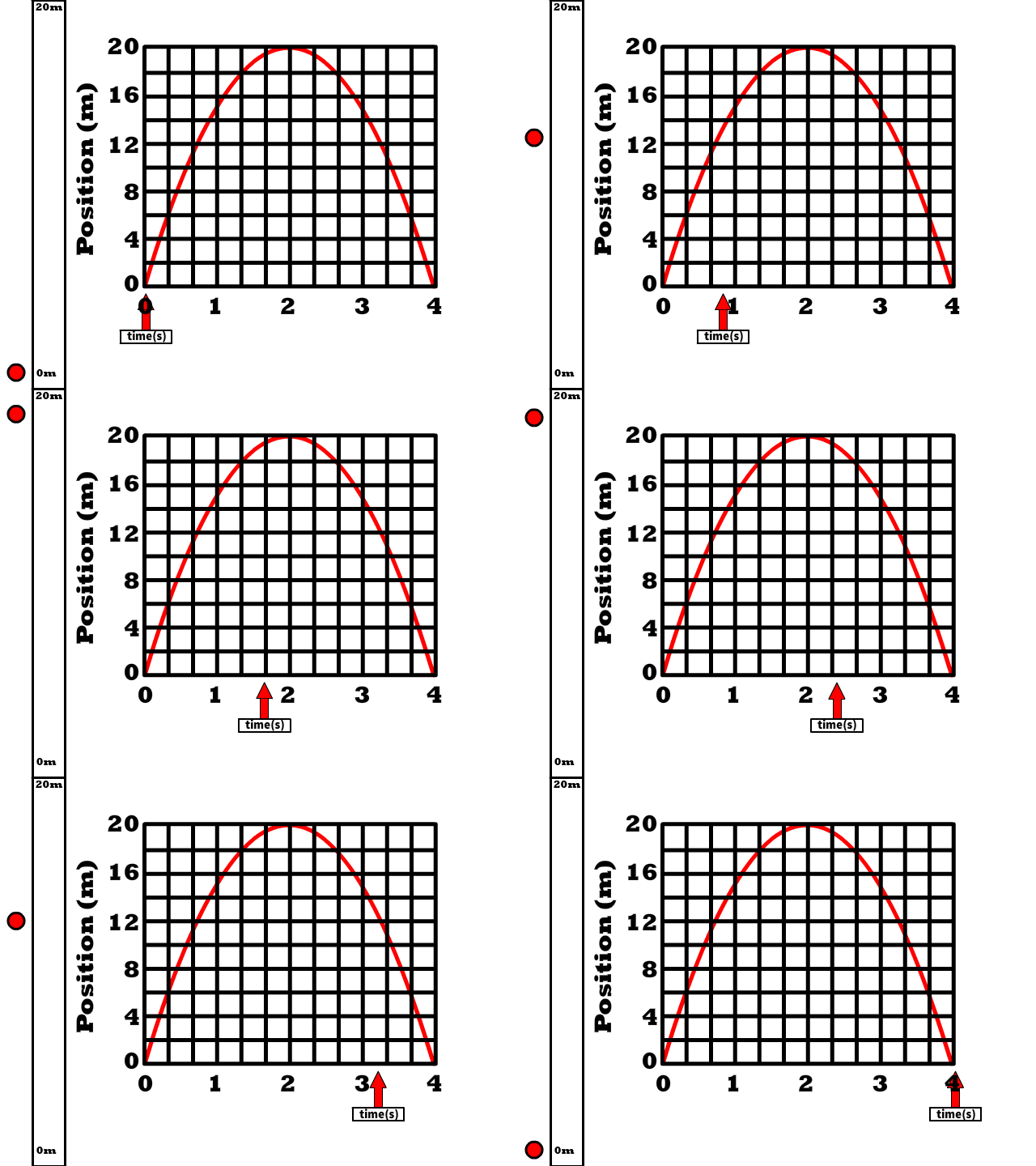
You can observe displacement on a position time graph
-
- The ball starts at 0 meters
- It gets to a peak of 20 meters, stops, and reverses
- It landing back at 0 meters
- A downward curving line on a PT graph represents the -10 m/s² (10 m/s² downward) acceleration of gravity on earth
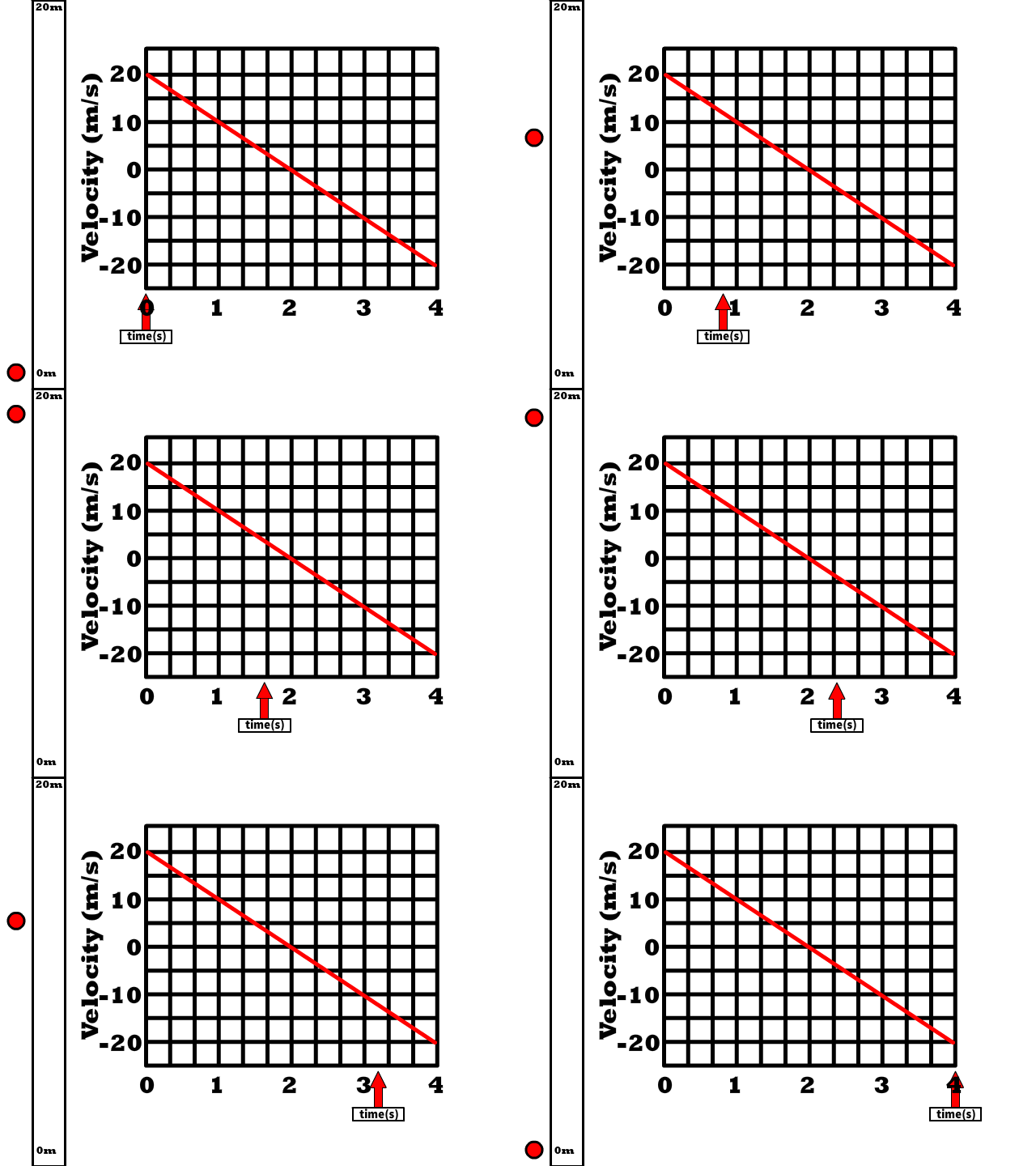
Y-Axis Motion on a Velocity/Time (VT) Graph
You observe how velocity changes on a velocity time graph
-
- The object here is thrown up at 20 m/s
- At the top of the path the graph will be at 0 m/s while instantaneously stopped
- The ball then lands with a reverse velocity of 20 m/s down (-20 m/s) in the graph
- A straight downward sloped line on a VT graph represents negatively (downward) changing velocity
- You get -10 m/s² when calculating the slope of this line representing a constant acceleration of 10 m/s² downward
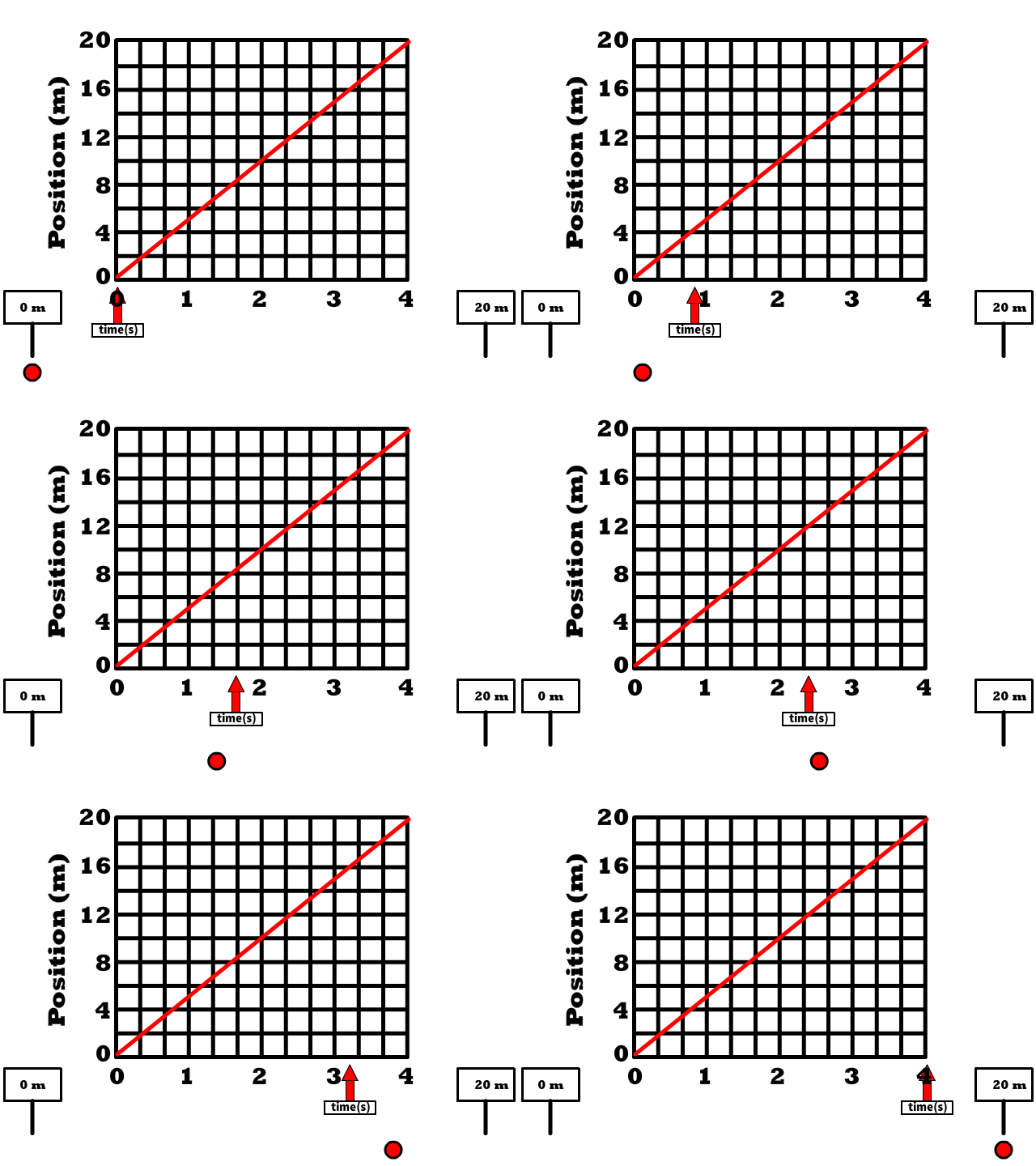
The X-Axis component of projectile motion is not affected by gravity and at constant velocity.
X-Axis Motion on a Position/Time (PT) Graph
-
- In this example, the ball moves forward at a constant rate going forward 5 meters every second for a total of 20 meters in 4 seconds
- A straight upward sloped line on a PT graph represents constant velocity
- The slope of this PT graph, which equals velocity, is 5 m/s
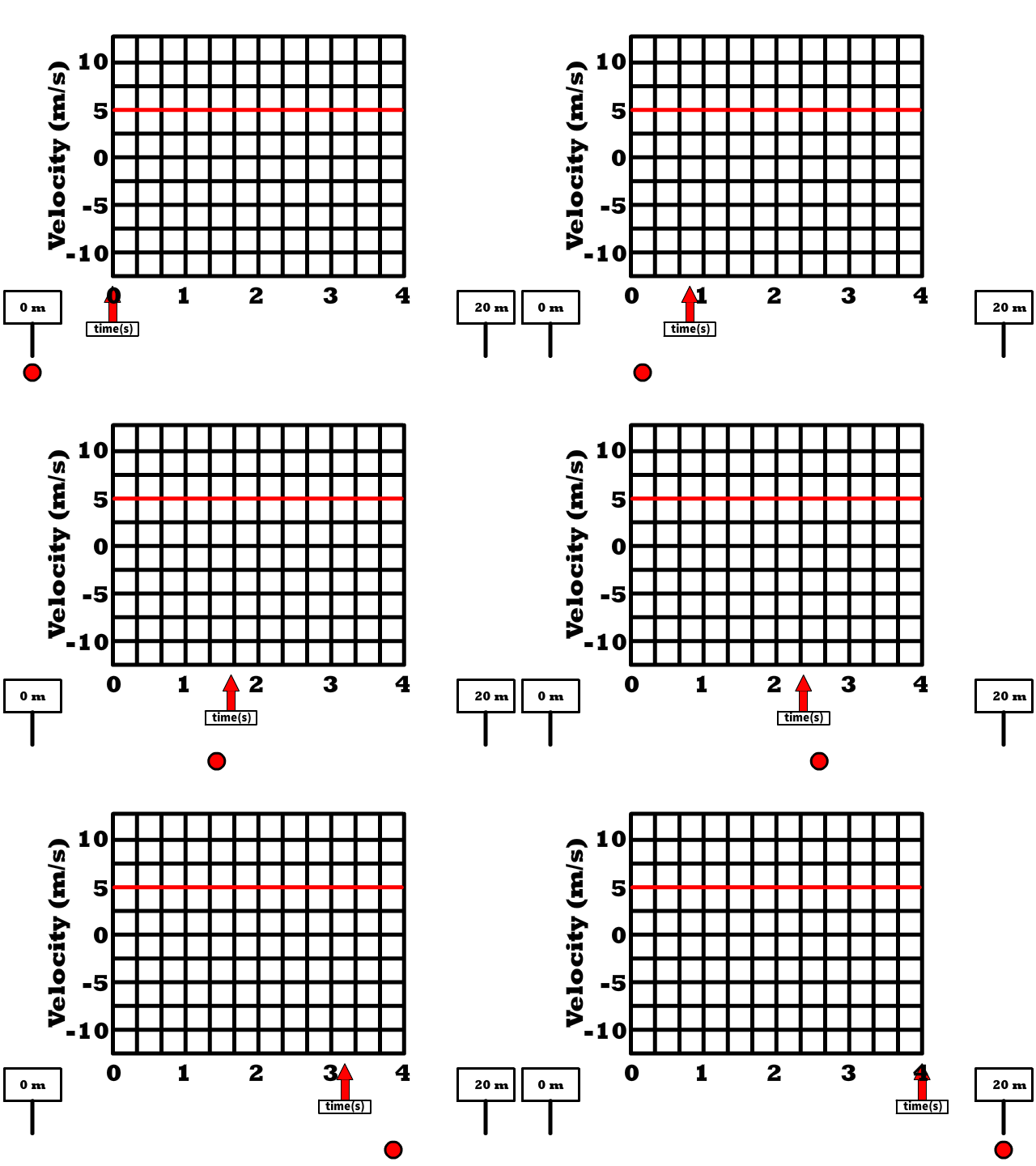
X-Axis Motion on a Velocity/Time (VT) Graph
-
- In this example, the ball is staying at 5 m/s the whole time represented by the flat line at 5 m/s
- A flat line above zero on a VT graph represents constant forward velocity
Projectile Motion Quiz
Wrong shortcode initialized
Links
- Continue to part 4: Horizontal Projectile Motion Math
- Back to the Main 2D Motion Page
- Back to the Stickman Physics Home Page
- Equation Sheet